

Last Updated: October 23, 2026
Quick Summary
The hidden costs of buying a franchise go far beyond the initial franchise fee and include build-out overruns, technology fees, royalty and ad-fund payments on gross sales, legal and travel expenses, insurance above standard coverage, and state and local compliance costs. Most buyers underestimate these layers, so verify every Item 7 estimate against actual franchisee costs before signing.
- Royalty and ad-fund percentages apply to gross sales, not profit, so they are paid whether or not you turn a profit.
- Roughly 60% to 70% of total startup cash is spent before the doors open.
- Keep a build-out budget with a 10% to 15% contingency separate from your working-capital reserve.
- Ask three current franchisees for their actual month-by-month cash balance from signing through month twelve.
- Signing without an independent franchise attorney review is the most expensive shortcut buyers take.
Table of Contents
- Why Franchise Costs Go Beyond the Initial Investment
- Franchise Startup Costs: Where the Real Money Goes
- Franchise Fees and Royalties: The Recurring Costs That Add Up
- Reading the Franchise Disclosure Document Costs Line by Line
- Franchise Working Capital Requirements and Cash-Flow Timing
- The Hidden Costs of Buying a Franchise That Buyers Miss Most
- How to Verify Estimates Before You Sign
- Frequently Asked Questions
Why Franchise Costs Go Beyond the Initial Investment
The hidden costs of buying a franchise rarely appear in the headline number that sold you on the opportunity. The International Franchise Association projects franchise output will climb from $907.3 billion to $921.4 billion in 2026, a 1.6% increase, and establishment counts will grow from 832,521 (EXTERNAL_LINK: IFA 2026 Franchising Economic Outlook | franchise.org). That growth story is real, but it says nothing about what an individual buyer actually pays.
Franchise Startup Costs: Where the Real Money Goes
Franchise startup costs fall into four buckets: the initial franchise fee, build-out and leasehold improvements, equipment and required systems, and opening inventory. Most buyers budget carefully for the first and underestimate the other three. A common mistake is treating the franchisor's Item 7 estimate as a spending plan rather than a range with a low end you will probably exceed.
Build-Out, Leasehold Improvements, and Construction
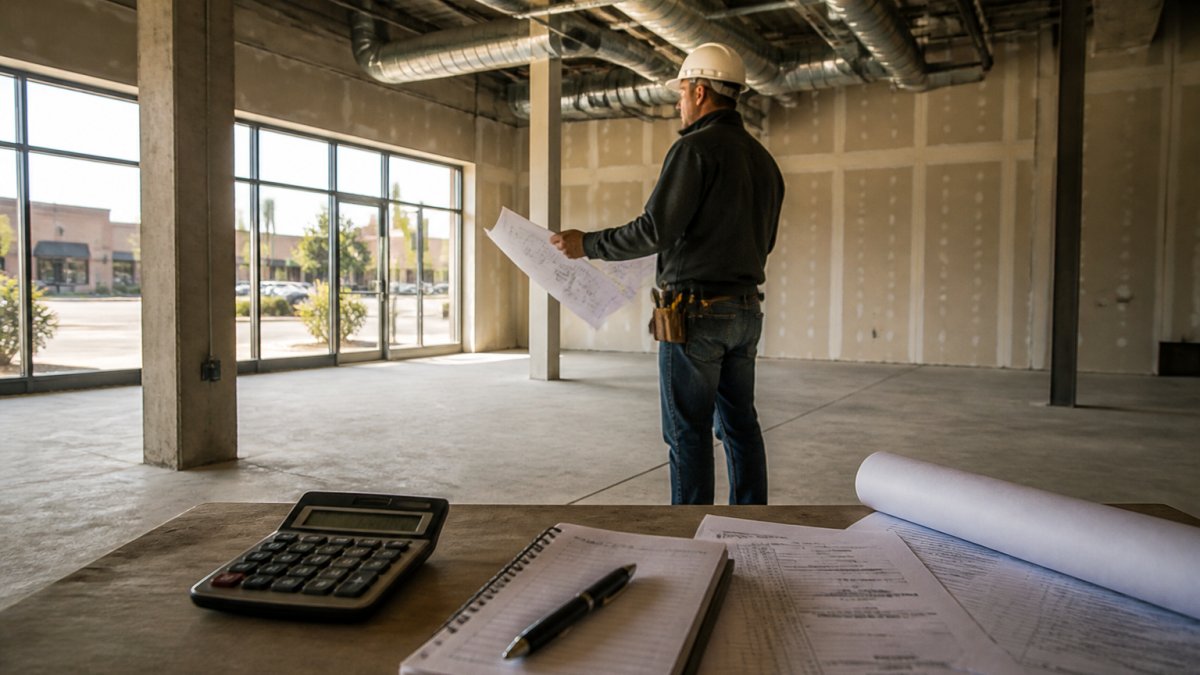
Construction is the line item that breaks budgets. A franchisor specifies a prototype, but your landlord controls the shell, the timeline, and the change orders. Costs that surface late include ADA compliance upgrades, grease traps, fire suppression, HVAC capacity, and utility hookups the landlord pushes to the tenant. Get three contractor bids before signing a lease, and confirm in writing which improvements the landlord funds.
Equipment, Technology Fees, and Required Systems
Required equipment purchasing often means buying through approved vendors at set prices, with little room to negotiate. Technology fees are separate and recurring: POS systems, scheduling software, and reporting platforms the franchisor mandates.
Franchise Fees and Royalties: The Recurring Costs That Add Up
Royalty fees and marketing contributions are the costs that never stop. A royalty rate is typically a percentage of gross sales, paid weekly or monthly, whether or not you turn a profit.
Here is the part most guides miss: these percentages apply to gross sales, not net. A franchise doing $800,000 in annual revenue at a 6% royalty and 2% ad fund sends $64,000 out the door before rent, payroll, or debt service.
| Cost Layer | Typical Basis | When It Hits | Easy to Miss? |
|---|---|---|---|
| Initial franchise fee | One-time, fixed | At signing | No |
| Royalty fees | % of gross sales | Monthly | No |
| Advertising fund | % of gross sales | Monthly | Sometimes |
| Build-out overruns | Project-based | Pre-opening | Yes |
| Technology fees | Fixed monthly | Ongoing | Yes |
| Renewal and transfer fees | Fixed | At renewal or sale | Yes |
Reading the Franchise Disclosure Document Costs Line by Line
The Franchise Disclosure Document is where every cost claim gets tested. Item 5 covers initial fees, Item 6 covers other fees, Item 7 covers your estimated initial investment, and Item 8 covers required purchases from approved suppliers. Our FDD Score™ AI analysis lets you vet franchises.
Franchise Working Capital Requirements and Cash-Flow Timing
Franchise working capital requirements are the funds you need to cover operating expenses, debt service, and an owner's salary until the business reaches break-even. Franchisors disclose a recommended figure in Item 7, but that number often assumes a fast ramp and excludes the timing problem: money leaves your account months before revenue arrives. The fix is not a bigger lump sum, it is a month-by-month cash-flow map that shows when each dollar is due.
Map the cash-flow timeline before you sign
Most franchise buyers think in totals. Lenders and franchisors think in dates. Build a simple spreadsheet with one column per month from signing through month twelve, and place every known outflow on the date it is actually due:
- At signing: initial franchise fee (often due in full or in installments within 30 days), franchise attorney review, and any application or territory fees.
- Pre-construction: architectural drawings, permit applications, and the first month of rent if your lease starts before build-out finishes.
- During build-out: contractor draws, equipment deposits (approved vendors frequently require 50% down), signage, and the first technology or POS setup charges.
A common pattern is that 60% to 70% of total startup cash is spent before the doors open, while revenue in month one is typically a fraction of a stabilized month. That gap is what working capital is for.
Separate working capital from build-out budget
The single most common liquidity mistake is letting construction overruns eat the reserve. Keep two buckets: a build-out budget with a 10% to 15% contingency, and a working-capital reserve that does not get touched until opening. If the build-out runs over, go back to the lender or the landlord, do not raid the operating reserve, because that is the money that pays payroll in months two through six.
Stress-test the timeline, not just the total
Run three scenarios on the same spreadsheet: base case, a 90-day construction delay, and sales 15% below plan for the first six months. In the delay scenario, rent, insurance, and loan interest keep accruing with zero revenue. In the low-sales scenario, royalties and ad funds fall with sales, but rent, debt service, and minimum staffing do not. If either scenario forces you to miss a payroll or a loan payment, your reserve is too thin regardless of what Item 7 recommends.
The Hidden Costs of Buying a Franchise That Buyers Miss Most
The hidden costs of buying a franchise cluster in places buyers do not think to look, and they are rarely one big surprise. They are a stack of mid-sized line items that each look manageable alone and together blow a hole in the reserve. Here is where they actually show up, and how to price them before you sign.
Legal and professional fees
A franchise attorney review is not a formality. Expect a few thousand dollars for a full review of the Franchise Disclosure Document and franchise agreement, more if you negotiate territory, renewal, or transfer terms. Add an accountant or tax advisor to model entity structure, depreciation on build-out and equipment, and the tax treatment of the initial fee. Buyers who skip the attorney review often pay for it later in transfer or renewal clauses they did not understand.
Travel and discovery-day expenses
Discovery day is usually unpaid and self-funded: airfare, hotel, meals, and ground transportation for you and often a spouse or business partner. Add mandatory training travel, many systems require multi-week training at headquarters or a designated training store, with tuition sometimes separate from the franchise fee. Grand-opening support may require you to house and feed a franchisor field consultant for several days.
Insurance beyond standard small-business coverage
Franchisors typically require general liability, property, workers' compensation, and often commercial auto and umbrella coverage at limits above what a standalone small business would carry. Some systems mandate cyber liability or employment practices liability. Premiums depend on your state, industry, and payroll, but the requirement itself is non-negotiable and is verified before you open. Get quotes from an independent agent who writes franchise accounts before you commit to a build-out budget.
State, local, and industry-specific compliance costs
This is the category buyers most often underestimate because it varies so much by location and sector. Depending on your state, county, and industry, expect some combination of:
- Business licenses and registrations: state and local general business licenses, sales-tax permits, and fictitious-name filings.
- Health and food permits: for food and beverage franchises, plan review fees, food handler certifications, and routine inspection fees.
- Contractor and trade licensing: service franchises in plumbing, electrical, HVAC, or pest control often require state licensing for the owner or a qualifying employee, plus continuing education.
A useful rule of thumb: budget a compliance line item of several thousand dollars for a low-regulation service franchise and materially more for food, childcare, or healthcare-adjacent concepts. Confirm the specific requirements with your state's licensing agency and your county or city business office, the franchisor's Item 7 estimate is a national average, not your local bill.
The fees nobody mentions at the sales meeting
Beyond the recurring royalty and ad fund, watch for renewal fees at the end of your term, transfer fees if you sell, required remodeling at set intervals (often every five to ten years), local marketing spend the franchisor mandates on top of the ad fund, and employee retraining when systems change. Each is disclosed in Item 6, but they are easy to skim past because they are years away, until they are not.
If you want buyer-side advisory that catches these before you sign, our team at BIZLINXAI offers flat-fee advisory and zero broker commissions.
How to Verify Estimates Before You Sign
Verification is a process, not a conversation with the sales rep. Free guides, checklists, and templates can help you work through it. Work through this checklist:
- Compare Item 7's low and high estimates against three current franchisees' actual opening costs.
- Ask Item 21 references what they spent beyond the disclosed range, and what surprised them.
- Confirm every Item 8 required purchase, its approved vendor, and whether pricing is fixed.
- Get written landlord confirmation of who pays for which improvements.
- Model a sensitivity case: 15% lower sales, same fixed costs, and see if you still cover debt service.
- Budget legal, travel, insurance, and licensing as separate line items, not rounding errors.
- Confirm renewal, transfer, and remodel fee amounts in Item 6 before you commit.
The IFA's projected establishment growth from 832,521 signals a competitive market, which makes disciplined cost verification your edge (EXTERNAL_LINK: IFA outlook data | franchise.org). Buyers who model the full cost stack, not just the initial fee, negotiate from facts instead of hope.
Frequently Asked Questions
What hidden costs should franchise buyers look for?
The most commonly missed franchise costs include build-out and leasehold improvements, technology and software fees, required local marketing spend, travel to discovery day and training, insurance requirements, licenses and permits, and renewal or transfer fees. Ongoing royalty fees and advertising fund contributions also add up over time. The International Franchise Association projects franchise output to rise from $907.3 billion to $921.4 billion in 2026, but that industry growth says nothing about your individual cost load. Read Item 7 of the Franchise Disclosure Document carefully and compare every line to your own budget.
How much working capital should you budget for a new franchise?
Franchise working capital requirements vary widely by category, so there is no single number. Budget enough to cover operating expenses, debt service, and an owner's salary for the months before gross sales reach your break-even point. Many buyers underestimate how long ramp-up takes and run short in month three or four. Build a cash-flow timeline from signing through break-even, then add a buffer for cost overruns. Verify your assumptions with current franchisees rather than relying only on the initial investment estimate in the FDD.
What is the difference between a franchise fee and a royalty fee?
The initial franchise fee is a one-time payment for the right to use the brand and system, usually paid at signing. Royalty fees are ongoing payments, typically a percentage of gross sales, paid throughout the life of the agreement. Marketing and advertising fund contributions are separate from both. Always confirm the exact royalty rate and marketing fees in your FDD.
Can a franchisor require renovations or equipment upgrades?
Yes. Many franchise agreements allow the franchisor to require remodeling, equipment replacement, or technology upgrades during the term, and those costs may not appear in the initial investment estimate. Check the FDD for language about required purchases and system standards, and ask current franchisees what upgrades they have been asked to fund. Budget a reserve for mid-term capital spending so a required refresh does not wipe out your working capital.
The gap between the advertised investment and what you actually spend is where franchise deals succeed or fail. BIZLINXAI gives buyers the tools to close that gap: FDD Score™ AI analysis of every cost item, InvestorScore™ prequalification, and flat-fee advisory with zero referral fees and no conflicts. Get started with BIZLINXAI and walk into your franchise agreement knowing exactly what you will pay.
